
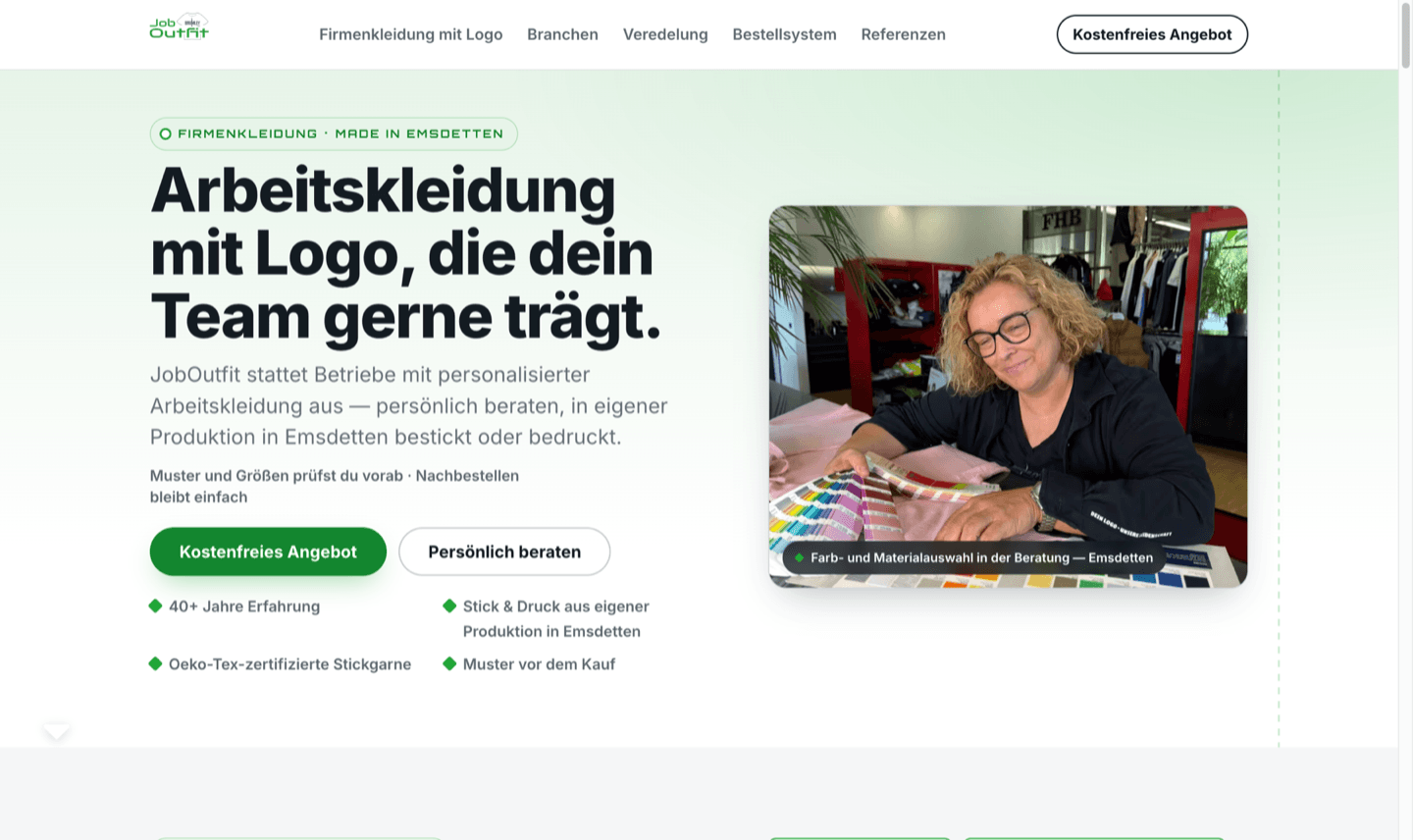
JobOutfit · B2B workwear · Germany
From a product form to a B2B enquiry journey that starts with context.
Read the JobOutfit case studyDer Transfershop sells DTF transfers to textile printers, shops and sports clubs. Leadforge has been its Growth Partner since March 2024 — before the first sale. Since then, der-transfershop.de has grown into a business with 419 paying customers and more than 2,700 orders. Monthly revenue grew 28×, the average order value rose from €32 to €84, and repeat customers now carry 88 % of revenue.
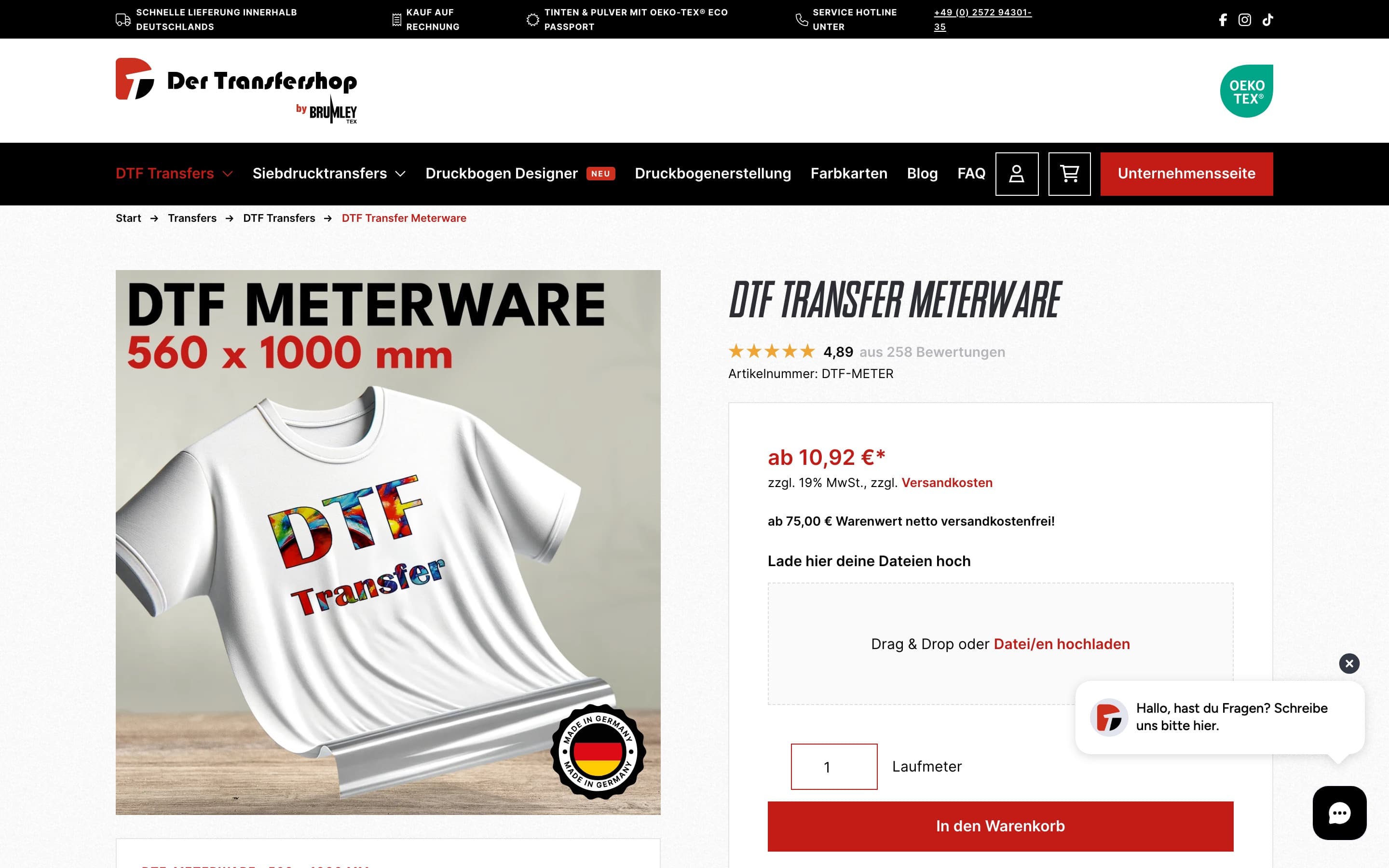
Monthly revenue
€525 → €14,567
June 2024 → September 2026, net. Bars: revenue per quarter.
PROJECT SNAPSHOT
Leadforge did not build the shop technically — theme, print-sheet designer and hosting belong to the client and their developer. Leadforge owns the commercial growth.
THE RESULT
The first month brought seven orders. September 2026 brought 174 — the strongest month in the shop's history.
28× monthly revenue
€525 in June 2024 → €14,567 in September 2026, net of VAT and shipping, after refunds.
See the growth curve174 orders in September 2026 instead of 37 in September 2024 — each worth more than twice as much on average. Free shipping from €75 became one of the central purchase levers.
€32 → €84 average order value (2.7×)
Net, September 2024 vs. September 2026 — with 4.7× as many orders: together 12.5× monthly revenue.
How the basket grewRevenue from repeat orders grew from €545 to €14,101 a month. Today 88 % of revenue comes from repeat orders.
26× monthly revenue from repeat orders
€545 → €14,101 per month, net, September 2024 vs. September 2026; today 88 % of revenue.
The repeat engineTHE GROWTH CURVE
In March 2024 the shop had no paying customers; the first order came on 5 June 2024. Since then monthly revenue has grown 28×, up to the record month of September 2026.
THE GROWTH SYSTEM
Leadforge came in as Growth Partner, not as an ad agency — responsible for the whole commercial path, from first contact to regular customer.
The pattern transfers to any business that lives on repeat customers — from online shops to restaurants: win first-time customers, turn them into regulars, grow the average order, find valuable segments, build organic demand, and keep moving effort to the next constraint.
THE SAMPLE ENGINE
The free sample was the way in: prospects checked the quality in their own hands and were then followed up personally — to the first order and on to the second. More than half of the shop's most loyal customers came this way.
Between the sample and the first order there was no waiting, but follow-up: quality, application, delivery time, open questions — and an incentive for the first order.
Usually what's missing isn't another channel but the system behind it: turning a first order, first visit or first booking into a habit.
THE REPEAT ENGINE
Many first orders were cautious trials with a new supplier. Customers who ordered a second time were won: four in five went on to order a third time, and 85 to 92 % stayed at every step after that. Personal follow-up, retention campaigns and ongoing customer communication were aimed at exactly that.
A customer who comes back has brought €805 in net revenue on average so far — a one-time buyer €35.
SEPTEMBER 2024 → SEPTEMBER 2026
The revenue jump came from two directions at once: far more orders, each worth more than twice as much on average. Leadforge actively managed the shop's commercial economics; from August 2025, free shipping from €75 became one of the central purchase levers — in the ads, on the product pages and at checkout.
A SECOND MARKET
The shop started with resellers who process transfers and sell to their own customers. In the customer data Leadforge spotted a second segment: clubs that order directly from the shop, without a middleman. Leadforge turned that into a market of its own — with its own audience, its own creatives and its own arguments; since March 2026 a dedicated club campaign comes on top.
GROWTH CONTINUES
Growth hasn't flattened as the business matured. Figures as of 30 September 2026, from the shop's paid orders.
THE NEXT CHAPTER · CRO AND SEO
BEFORE
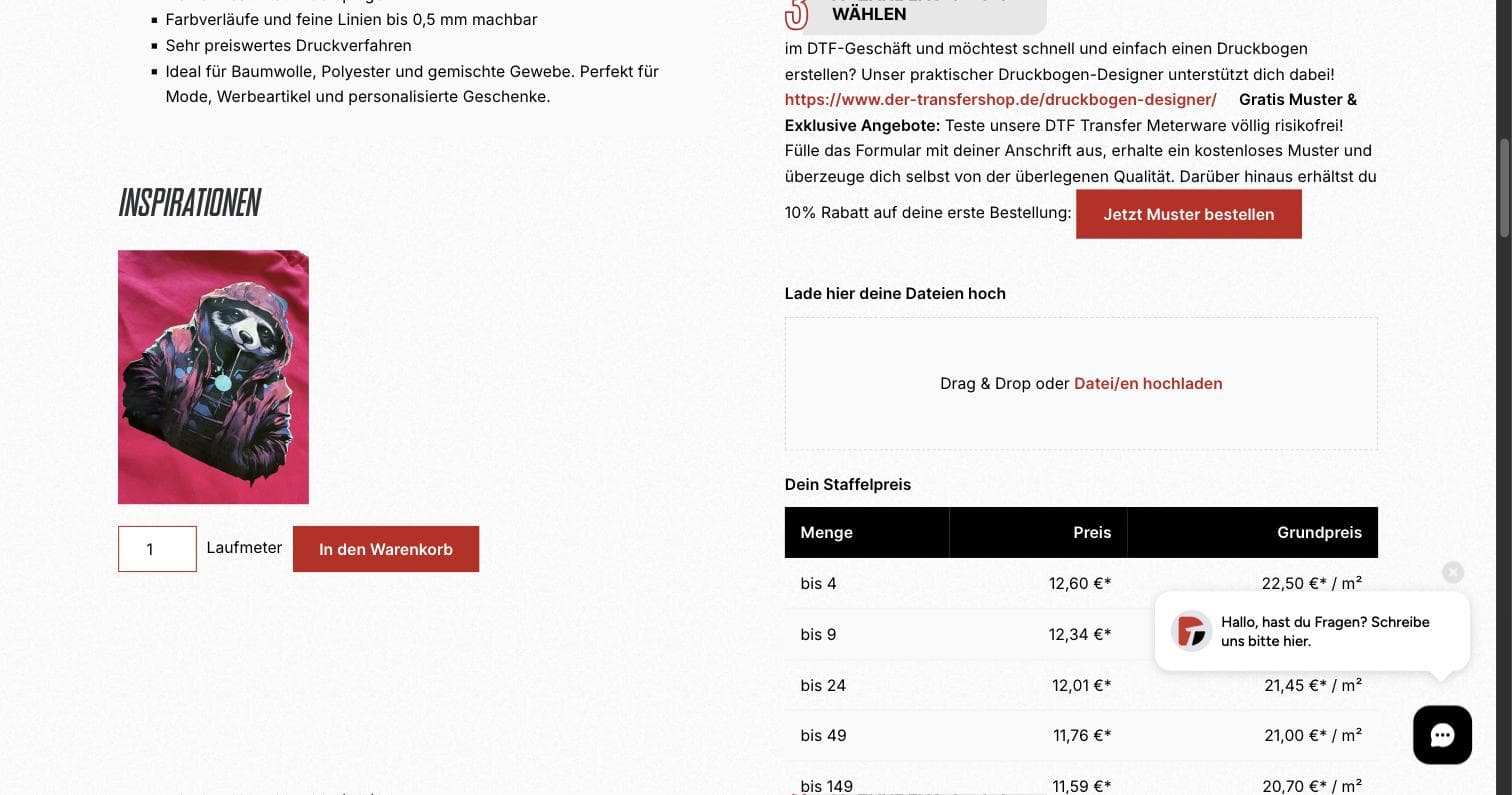
On the original Meterware page, the upload and a seven-row price table filled the right column. The add-to-cart button sat in the left column below an inspiration image — in the second screen on a desktop.
TODAY
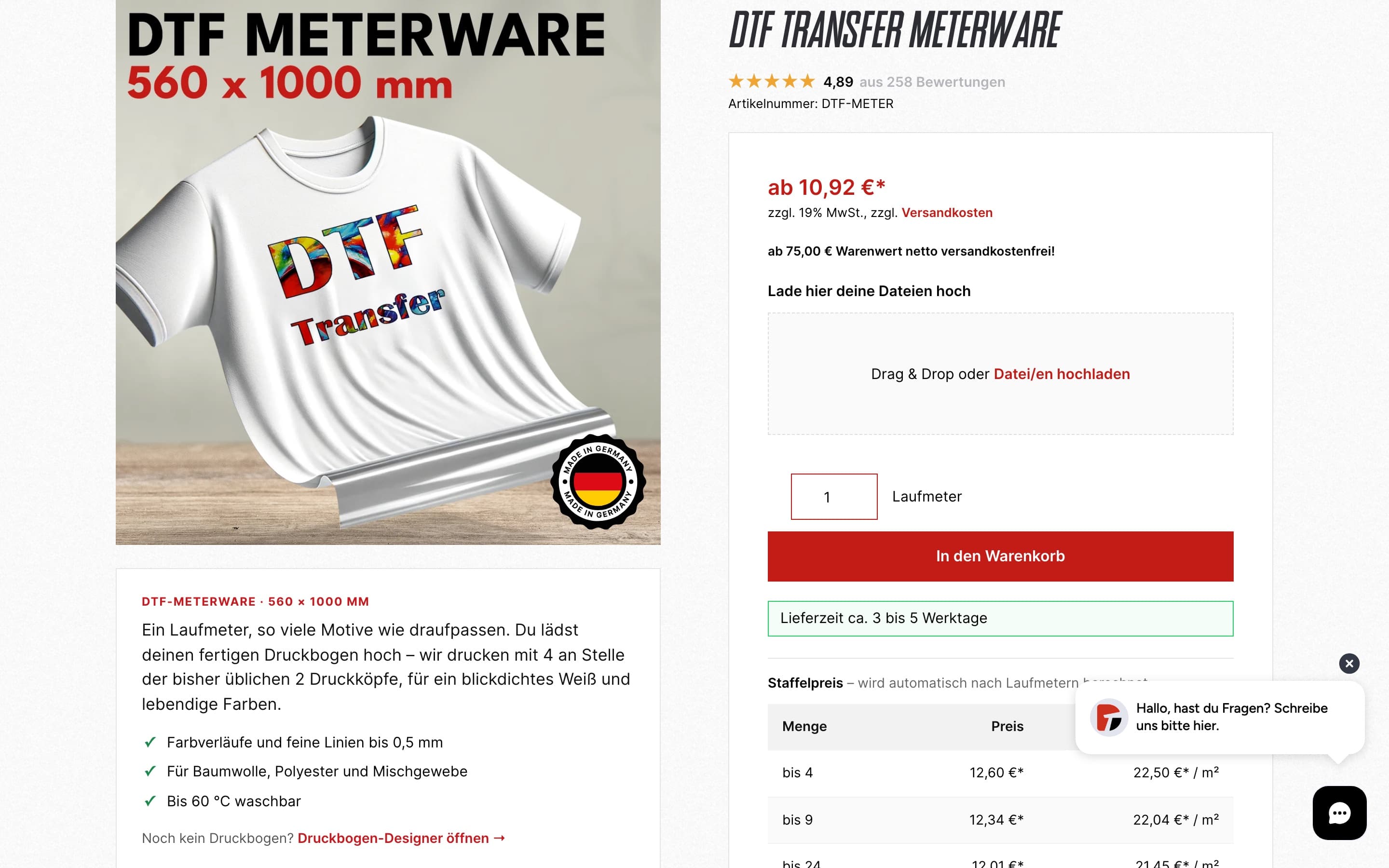
The Meterware product page now shows the order button on the first screen — in a buy card with price, file upload, quantity and delivery time. The client approved wording and placement before anything went live.
Buying path first, reach second: the page is both the entry point for new customers and the order page for regulars, some of whom reorder several times a week. Every change has to serve both.
OUTLOOK · SEO AND CONTENT
Since September 2026 Leadforge has been building organic search — structured product data, new pages for free DTF samples and for clubs, guides on the questions customers actually ask. Early signals: for “DTF bestellen” and “DTF Transfer bestellen” the shop ranks on Google's first page, and in September 2026 already 6 of 16 new customers came through organic search.
The principle is the same as since the first sale: find the current constraint and move the effort there — first acquisition and samples, then activation, basket and repeat purchase, now organic demand. The results of this chapter will be added to this page, dated.
I look at where your business stands today: new customers, first purchase, repeat purchase, average order. Afterwards you know which lever matters next.
KEEP READING
JobOutfit · B2B workwear · Germany
From a product form to a B2B enquiry journey that starts with context.
Read the JobOutfit case studyYour privacy
We use cookies and similar technologies to run this site (necessary), measure how it’s used (analytics) and improve our advertising (marketing). You decide what to allow. Privacy Policy