
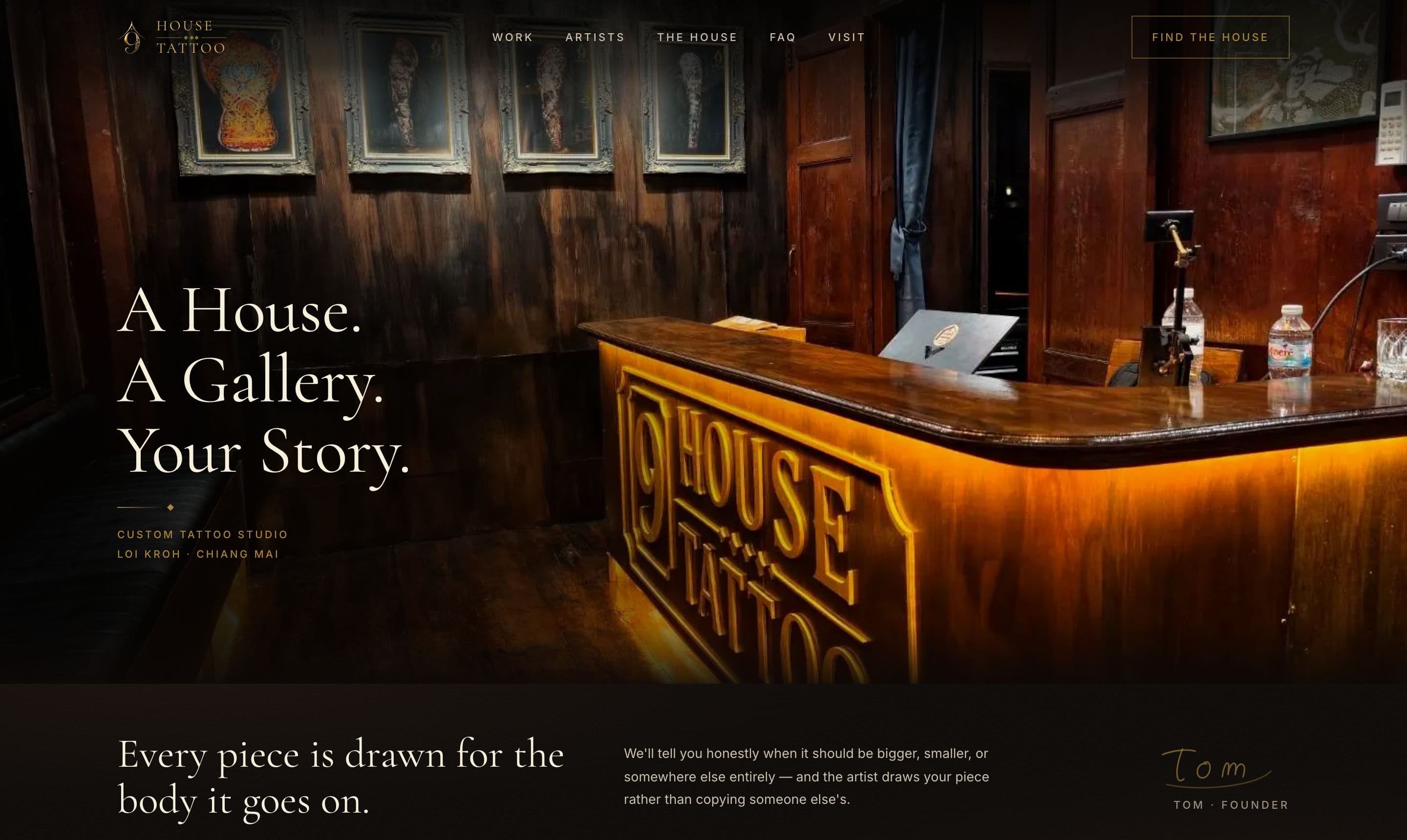
9 House Tattoo · Tattoo studio · Chiang Mai
A real room and real work, translated into the studio’s first website.
Read the 9 House case studyJobOutfit sells workwear with logos to businesses. Leadforge designed and built the new joboutfit.de — offer structure, enquiry journey, migration and measurement — so the first contact already says who is asking and what their business needs.
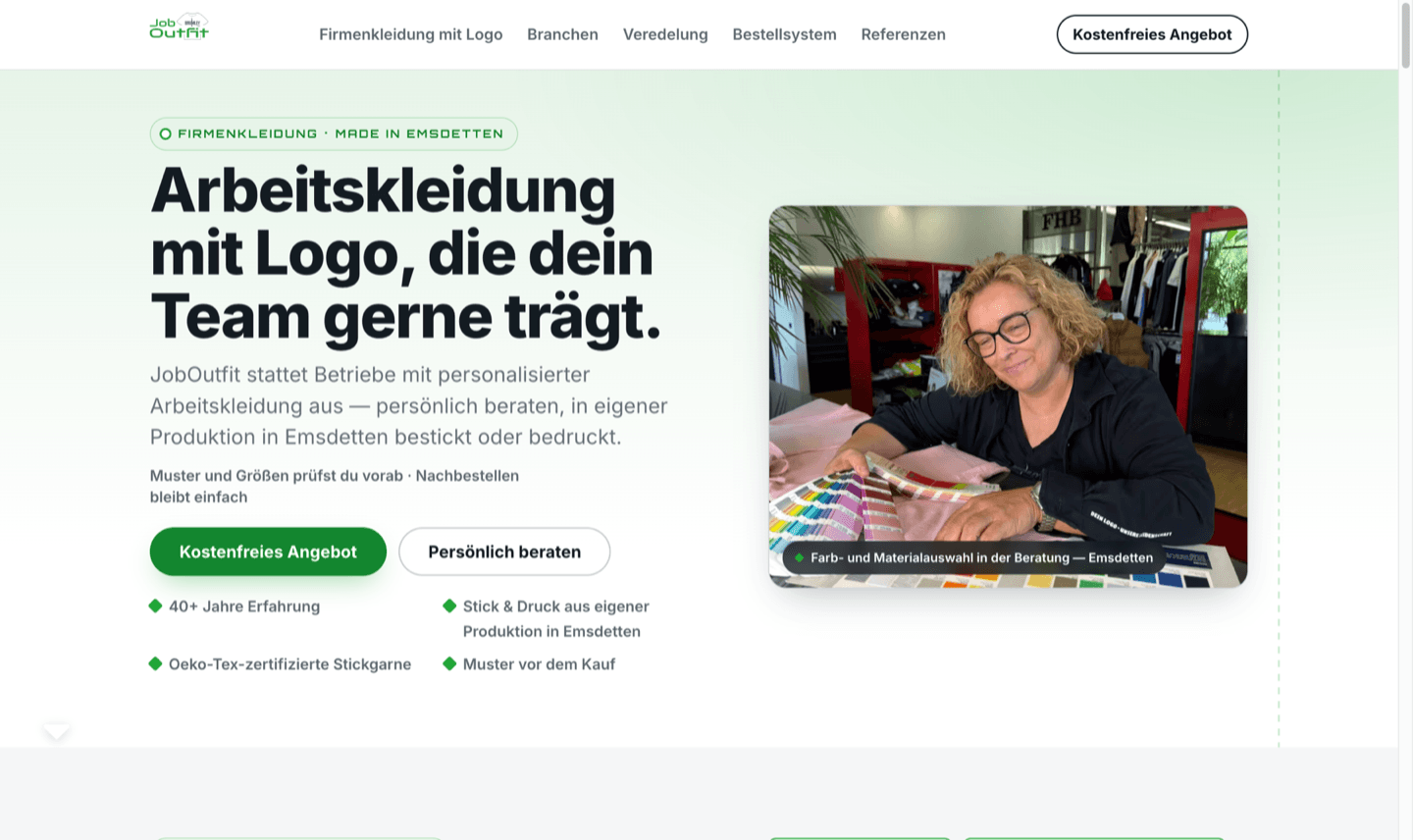
PROJECT SNAPSHOT
The shop stayed a separate system; Leadforge’s brief was the lead-generation site on joboutfit.de.
WHAT CHANGED FOR JOBOUTFIT
The enquiry journey first asks which procurement route fits — individual outfitting, a team package or an employee ordering system — then industry and team size. Sales starts the conversation with the business case, not a product list.
3 steps route, industry and scale before product detail
Live on the joboutfit.de enquiry page; before, the shop form opened with eleven garment categories.
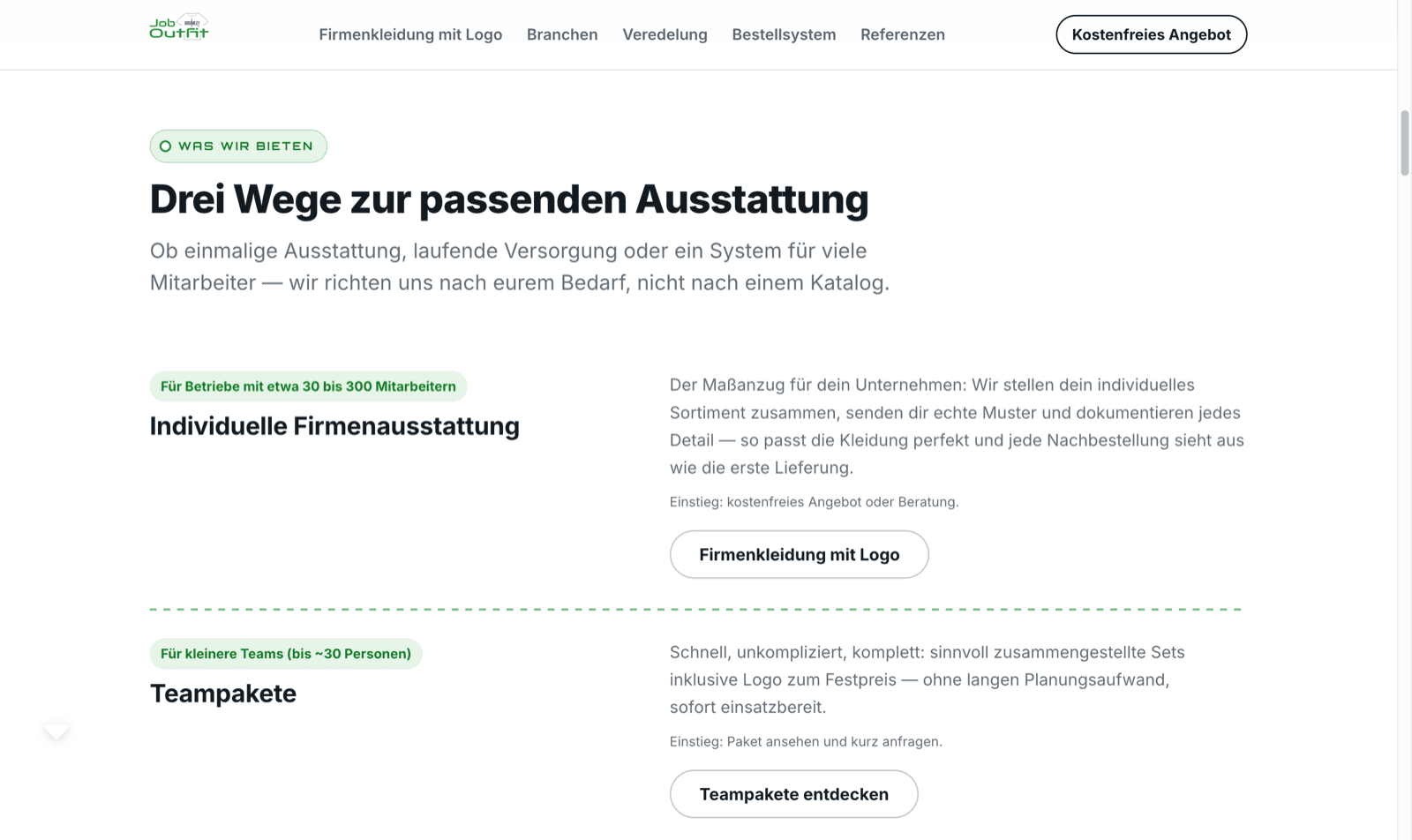
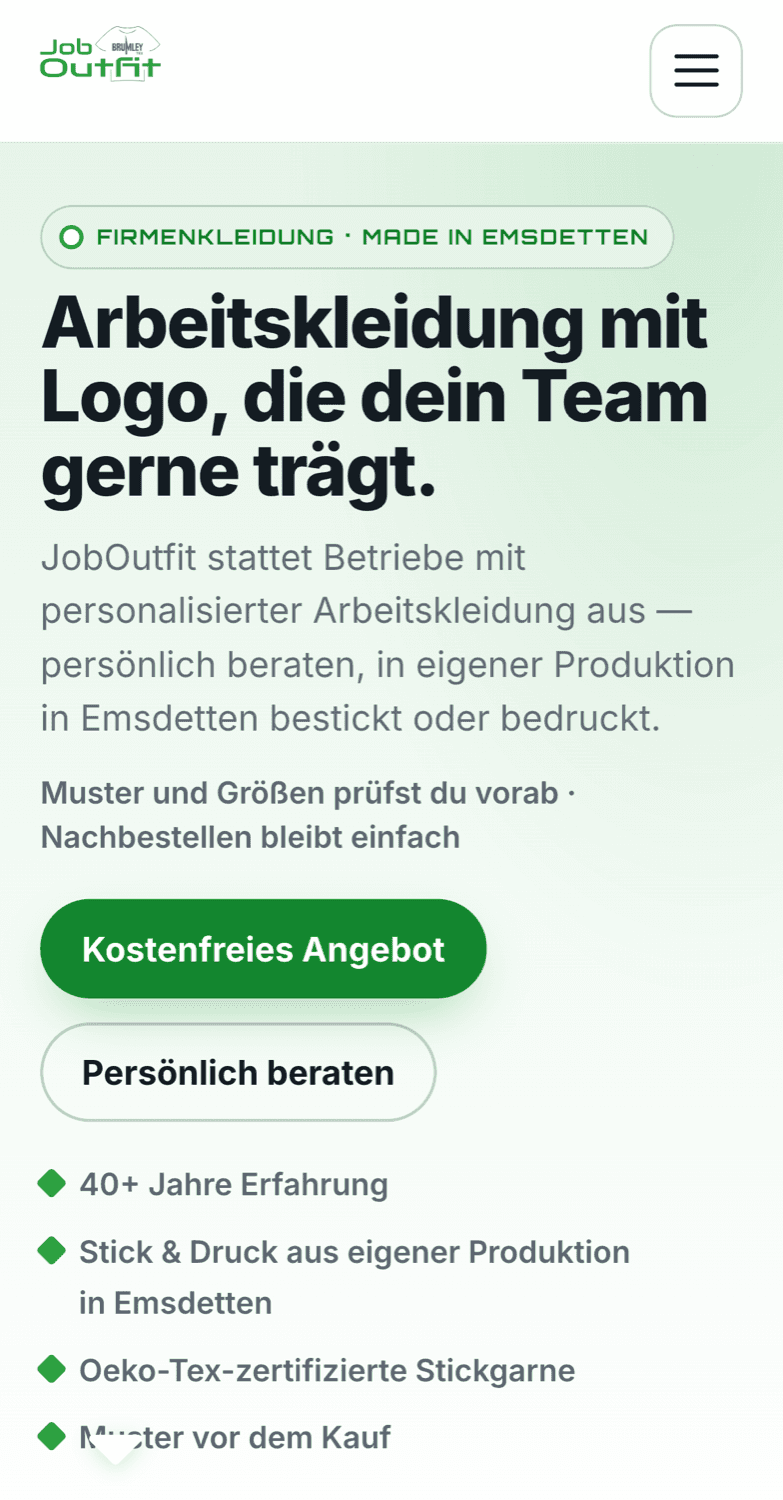
See before and todayBusinesses don't buy workwear piece by piece; they choose how to buy: an individual outfit, a fixed team package or an employee ordering system. That is where the homepage now starts.
3 ways individual outfit, team package, employee ordering system
Live on the joboutfit.de homepage, on desktop and on mobile.
The three waysFrom 15 to 28 September 2026, seven valid enquiries came in — as many as in 59 days in early 2026. Six of them from new customers; four offers have been sent.
7 in 14 days valid enquiries, 6 of them from new customers
15–28 Sep 2026 from the client's enquiry list; previously 7 enquiries in 59 days (21 Feb – 21 Apr 2026, recorded differently).
The first weeksHome page, five runs each on a simulated mid-range phone and on desktop. The median is shown, the spread underneath.
No measurement of the old site exists, so there is no before-and-after here — only the dated state of the new one. The enquiry page measures similarly: mobile 99, LCP 1.7 s.
Lighthouse 12.8.2, run locally on 15 September 2026 against the live site: first visit without a consent choice, production scripts untouched. PageSpeed Insights runs the same engine on Google’s servers, so its numbers vary slightly from run to run.
THE CENTRAL DECISION
BEFORE
The former shop enquiry path opened with product detail: eleven garment categories, quantities, decoration, logo upload and free text. That could prepare a quote. It said little about who was enquiring and which commercial route fitted.
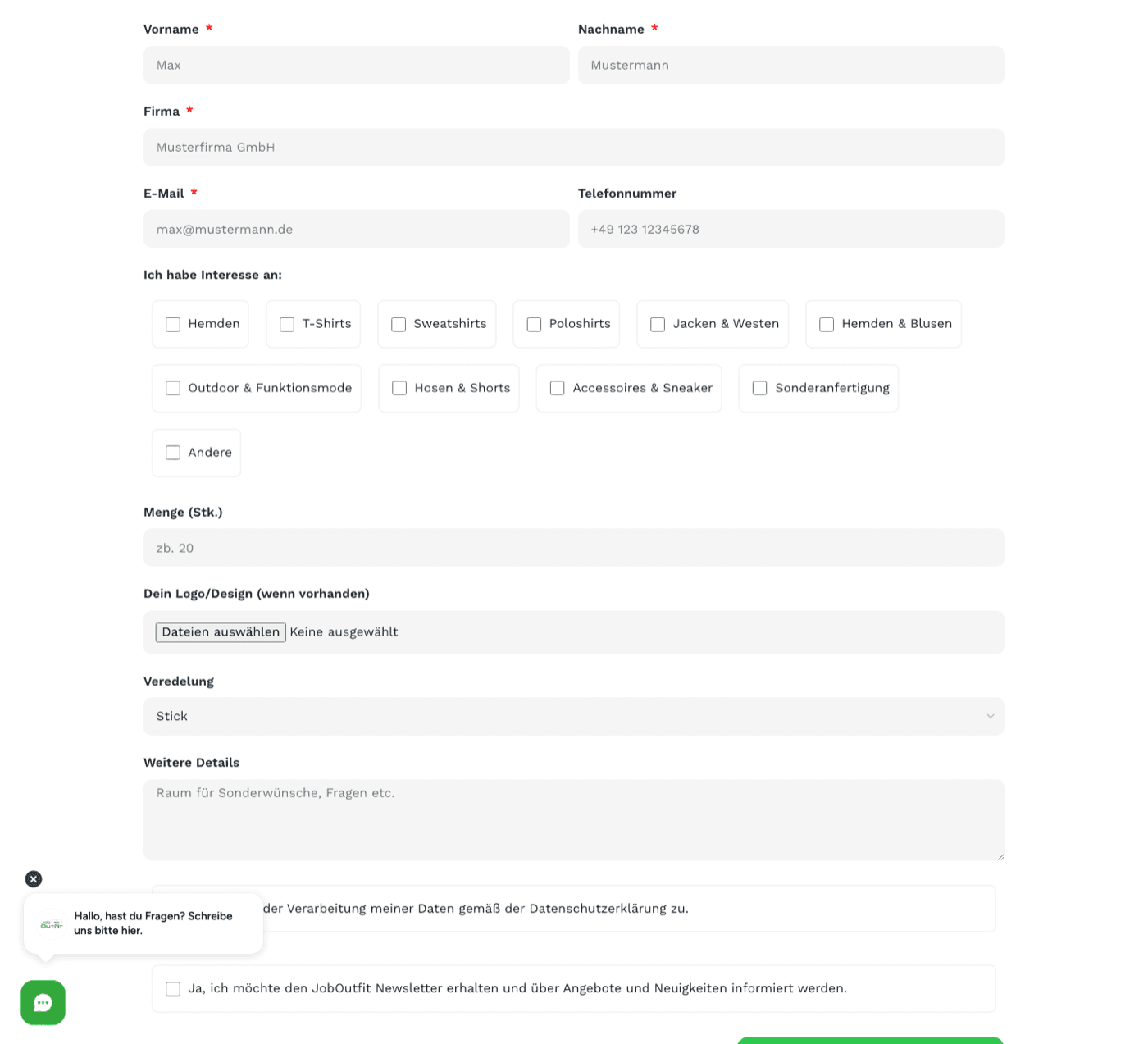
TODAY
The new enquiry journey first distinguishes between individual outfitting, a defined team package and an employee ordering system. It then places industry, scale and context. The conversation starts with the business case instead of a long product list.
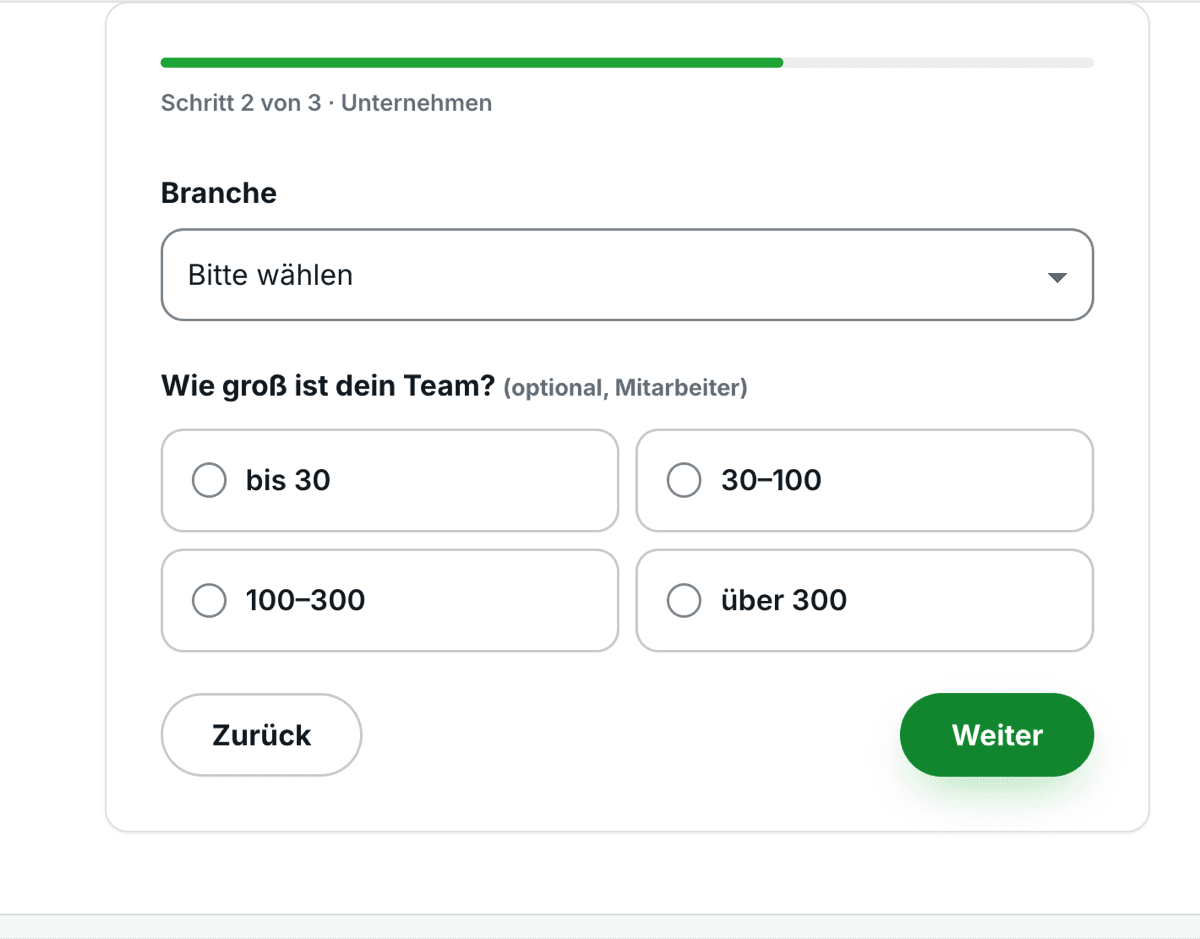
Specific items, quantities and logo files deliberately move into the follow-up conversation — a different order of information, not simply more fields.
THE OFFER
Businesses do not buy workwear item by item; they choose how to buy it. The site now opens with that choice: individual outfitting, a defined team package, or an employee ordering system.
JobOutfit’s own five-industry taxonomy was already there. Leadforge tied it to navigation, content and the enquiry journey, so orientation and qualification use the same words.
Then it is worth looking at where offer, enquiry journey and measurement currently fall apart on your side.
THE FIRST WEEKS
From 15 to 28 September 2026 — after the follow-up release with new service pages for embroidery and print — seven valid enquiries came in via form, email and phone. In early 2026 that took 59 days.
WHAT'S NEXT
In the first two weeks after the follow-up release, six of the seven valid enquiries came from new customers. What counts next is how many offers become orders. The client's enquiry list records every stage — from first contact to order — and the results will be added to this page, dated.
We look together at where offer, orientation, enquiry journey and measurement currently fall apart — and what would turn them into a dependable B2B lead system.
KEEP READING
9 House Tattoo · Tattoo studio · Chiang Mai
A real room and real work, translated into the studio’s first website.
Read the 9 House case studyYour privacy
We use cookies and similar technologies to run this site (necessary), measure how it’s used (analytics) and improve our advertising (marketing). You decide what to allow. Privacy Policy